Released: 18th June
Seen: 30th October
The concept of conversion therapy is simple to understand in theory, the idea that people can be changed from gay to straight through “therapy’ is one that’s been around for years… in practice, it’s torture. It’s straight-up torture and there is no middle ground on this, people are made to watch gay porn while being electrocuted to create a link between the pain and the desire, they’re beaten until they decide to ‘be straight’ or they’re just raped until eventually they break. So many options to try and turn a queer person into a straight person, every single one of them is straight-up torture done by people who should be thrown in the darkest prison cell you can find and absolutely none of them actually work because the victim of this torture isn’t suddenly straight, they’re just traumatised and are repressing who they are to avoid being hurt. It’s a real-world horror that is thankfully illegal in several places, medically frowned upon in others and hopefully will one day be considered as horrific a practice as “Drilling a hole in someone’s head to relieve headaches”. It’s also a powerful topic that can make for a compelling drama if done well and Leviticus does it so well that it might be one of the best uses of this specific real-world horror.
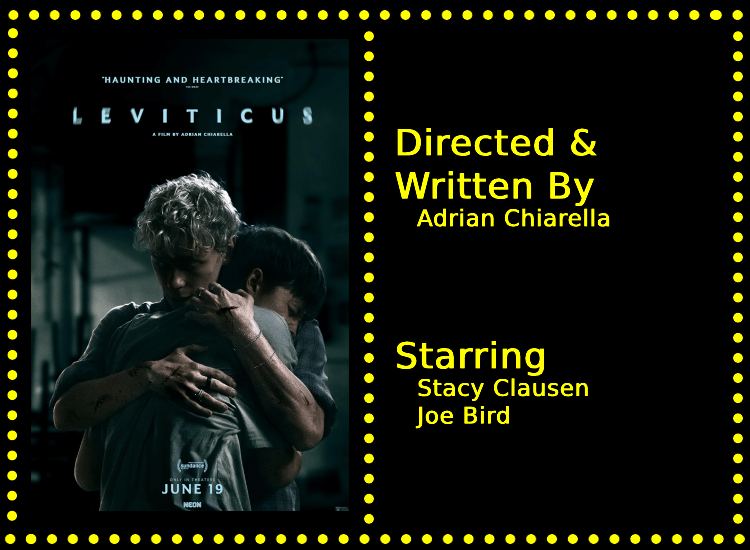
Leviticus takes place in a little Aussie town where Naim Reed (Joe Bird) and his mother have just arrived to start a new life. For Naim, that new life includes starting a secret little relationship with Ryan Whelan (Stacy Clausen) that seems to be going well at first until Naim happens to see Ryan kissing another boy, Hunter (Jeremy Blewitt) and, in a brief moment of jealous anger, alerts the boy’s father that his son and Ryan have been making out. That boy’s father happens to be a priest and he knows someone called the Deliverance Healer (Nicholas Hope) who performs a ritual on Ryan and Hunter to force them to curb their desires. That ritual creates an entity that only those two can see that takes the form of the person they most desire, and that entity will catch them when they’re alone and do horrible violent things to them. Eventually, this ritual is also done on Naim and soon he and Ryan both realise that their entity has taken on the form of each other, driving a wedge between their blossoming love that could end up killing them because these parents would rather have dead sons than queer sons.
Leviticus does not play around, it doesn’t shy away from what its message is. This is taking the internal torture of conversion therapy and giving it a physical form so the audience can see the true evil at work. Its shocking violence is purposeful, letting you feel the visceral pain that these kids are put through when they are made to go through this process simply for the crime of kissing another boy. It’s not subtle about it, it makes it clear how wrong it is that they have to go through this and how truly disturbing it is. The only moments of respite from the horror are those brief scenes where Ryan and Niam are able to just be together, to hold hands or kiss at the back of a bus without something actively trying to hurt them for it. Those moments of sweetness help make the horror of their feelings being used against them by this entity even more disturbing than it already is.

In a way, Leviticus feels like a spiritual cousin to the film It Follows, another film where sexual relations cause a strange entity to follow people and kill them in horribly violent ways, only this film uses it’s metaphor to present a real-world horror that people really deal with in a way that’s impossible to ignore. There is no shying away from why this is happening, the parents are the real monsters for doing this to their kids and the film does not pretend it’s anything else. The evil is bigotry and it plays that perfectly, in record time you go from understanding these kids and their relationship to seeing them being forced into this horror and how it messes with them and all in under 90 minutes. It works fast and hammers its point home as bluntly as you can, and it’s terrifying.
Every single element of Leviticus is absolutely brilliant, from the visuals, to the performances by our two powerhouse leads, to the script that so carefully builds this horrifying situation. Writer/Director Adrian Chiarella has drilled into the horror of conversion therapy in a way that’s palpable and compelling. Indeed, while we could and should praise the actors for selling this story so well, the MVP is Adrian whose script is just full of rich characters who you understand within seconds of meeting them and direction that’s so controlled that you know every single inch of that screen is exactly how he wanted it. You feel like you’re in safe hands during this horrifying story, that the end will be worth the nail-biting journey that you’ve been on and sure enough it absolutely is.
Leviticus is an absolute masterpiece, a display of how to take the horrors of the real world and twist it just enough to make it a strange and fantastic horror film. It’s a film where everything about it just works, it’s powerful from start to finish and isn’t afraid to smack the audience around a little just to get them to pay attention. Maybe it hits harder to a queer audience who has heard the horror stories of the thing being used as the plot for this film, maybe it hit me in just the right place but it feels like a film that anyone can sit and be horrified by. Maybe, if we’re lucky, after it’s horrified everyone they can work to do something to ban the real world evil that inspired this work of art.


