Released: 23rd March
Seen: 23rd July
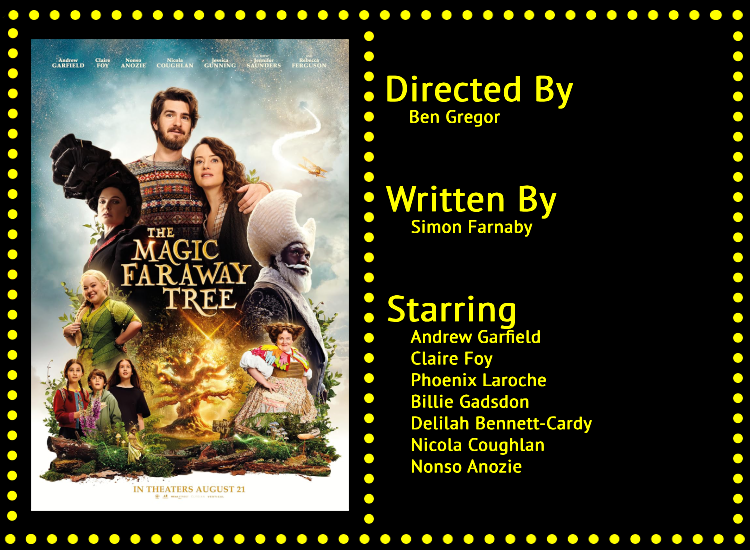
Enid Blyton might be one of the most prolific authors in history, if we are to believe she wrote everything accredited to her (there’s controversy on that, but that’s for someone else to address). Between 1922 and her death in 1968, she is the credited author of 762 books which include such beloved series as the Magic Wishing Chair, Noddy and The Magic Faraway Tree. The Magic Faraway Tree is particularly memorable to people of my age (my guess is specifically those who lived in Australia and Britain) thanks to a short-lived TV series The Magic of the Faraway Tree, based on the books with one of the most strangely memorable theme tunes from the era. It’s one of those stories that feels like it was always destined to be a charming feel-good children’s film if they ever got around to making one… well, they got around to it and lo and behold, it does exactly what you would want such a film to do.
The Magic Faraway Tree follows the Thompson family at a particularly low moment in their lives. Polly (Claire Foy) was the breadwinner of the family up until she quit her job because she learned that the company she worked for hid cameras in the fridge she worked on to spy on their customers and since the company paid for the apartment, the family has to move. Her husband Tim (Andrew Garfield) knows exactly where to go so they pack up their technology-addicted kids, Beth (Delilah Bennett-Cardy), Joe (Phoenix Laroche) and Fran (Billie Gadsdon) and head off. They wind up living in a barn that they could own if they can earn enough money making Tim’s pasta sauce and so, despite the children hating their new home, the family tries to make the best of it. Fran, who has been mute for a lengthy amount of time, goes exploring in the woods near their new home where she happens upon the Faraway Tree and meets the creatures living in it. Her new friends, Silky (Nicola Coughlan), Moonface (Nonso Anozie) and Saucepan Man (Dustin Demri-Burns) all take her up the ladder to a new land and soon a series of adventures begin which will include all the sweets you can eat, wishes, escaping a horrible school run by Dame Snap (Rebecca Ferguson) and, of course, trying to save the home made sauce business.
The Magic Faraway Tree is one of the most British children’s films ever made to entertain specifically the children of Britain, it could only be more British if it included the land of tea and crumpets and random moments of transphobia (fortunately, none of that is here). This is meant to resemble the sweet warm kind British childhoods where everything is a little bit whimsical and all the problems are just that everyone’s so busy with something modern so we need to embrace imagination and a free spirit to solve it. That same feeling of sweet warmth that you might’ve had watching Paddington is basically the feeling that this film goes for and mostly nails (not much of a shock, the same guy who wrote Paddington also wrote this). It’s not too tense, not too scary, it’s just sitting right on that sweet spot of charming with a very specific sense of humour that works wonderfully if you are attuned to its specific style.
There hasn’t been a children’s film this full of pure whimsy in a while and it does so with such effortless confidence. There’s some brief explanations of how things work, how to access the tree or what lands you can visit but once it’s done it trusts the audience enough to follow along so you can just marvel at the wondrous worlds that’ve been created. Everything is just so easy to enjoy, the world of sweets is so simple and beautiful that it makes you feel a little toothache because you can practically smell the sugar. The land of birthdays has most of the film’s best moments, even the school of Dame Snap feels imposing but not too terrifying. It’s all just balancing on the very edge of sweetness, never going too far away so it’ll do anything other than make you smile. There’s a simplicity that helps make this film so easy to follow and enjoy, you never wonder what’s going to happen because it’s practically impossible to get lost.
Sure, that might seem like a problem on some level, at the end of the day any tension that The Magic Faraway Tree has is minimal and solved very quickly and there’s a part of me that wishes there was a smidge more danger here, but that’s not what this film is going for. Sure, I’d love a little more of Dame Snap just chewing scenery and berating small children but we get enough of her to give the final act of the film some heft before going back to the sweet charming stuff. It’s a film for little kids that’s not talking down to them at all, but it’s also not challenging them. This isn’t like an Inside Out situation where the film has deeper meanings and tries to explore some deep topic, the film just wants kids to put down the iPad and play in the grass for a little bit and it sells that message by being one of the most effortlessly charming things you could imagine.
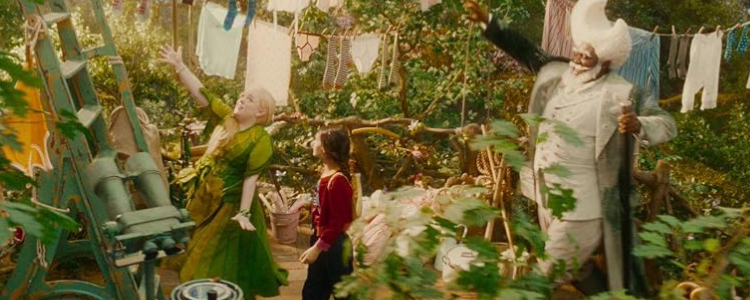
It also doesn’t hurt that The Magic Faraway Tree is visually stunning, and not just in the otherworldly area surrounding the faraway tree. Everything has enough strange playful charm to it that is just infectious and when they get to the special lands that’s when you can really tell that the set designers had a blast. Every new land feels so fully realised and fascinating, every costume is just strange and detailed enough that you want to reach out to touch it. It’s truly an enchanting sight to behold from start to finish, there’s a timeless quality that just pulls you in and makes everything you’re watching seem special. There’s a certain kind of magic to it all that will hopefully resonate with kids, both big and small.
Perhaps its only major flaw is trying to fit too many great things in such a small film. Dame Snap, the land of spells, the Thompsons’ grandmother played by Jennifer Goddamn Saunders and so many other truly great elements have to be sped past as quickly as possible because there’s only 110 minutes to spare and so much to do. It forces some genuinely fascinating ideas to feel a little short-changed in a way that suggests it could’ve been resolved with another few rewrites. Sure that means The Magic Faraway Tree moves at a brisk pace, which is certainly a plus for a film aimed towards younger audiences, but it also means some parts feel underbaked so maybe just removing one of the lands so we could explore the other ones better would’ve helped, save some stuff for the sequel and all that.
The Magic Faraway Tree really does feel quite magical, there’s a charm that can’t be denied. You can’t help but just lean back, relax and enjoy the fun, silly story that’s being lovingly told by this talented group of artists. It’s whimsical in a way you really don’t get from anything other than British films based on stories written by probably racist people from the 1920s… just saying, if the British film industry made more of this kind of movie, it would do their image a lot of good.


