
Released: 13th September
Seen: 13th September
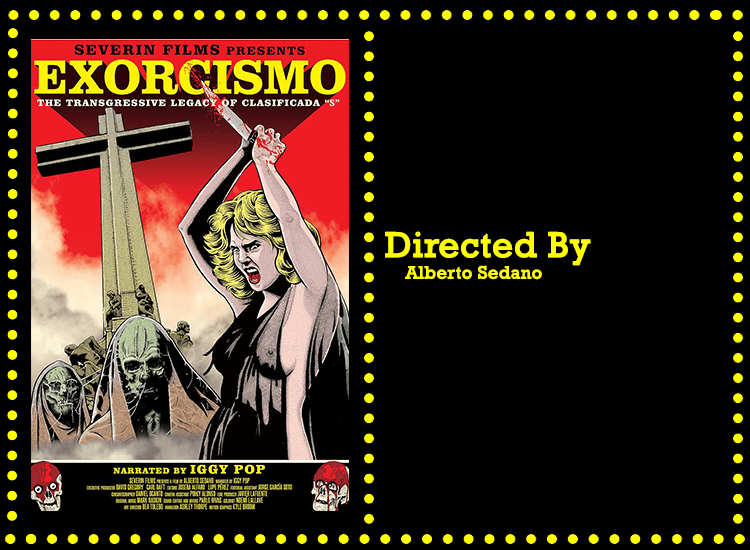
One of my weird fascinations is with film rating systems and what can and can’t be shown to certain audiences. The entire strange history of the US’s NC-17 rating is something I will never stop being fascinated by, same with the story of the British Video Nasties and how some horror films were considered so vile that owning a copy was grounds for an arrest. The ways that these ratings have impacted what movies get made or released is something truly worthy of lengthy study so hearing about this kind of censorship from around the world is something I’m eager to learn more about, which is why I’m glad that I got a chance to see Exorcismo: The Transgressive Legacy of Clasificada ‘S’ because it turns out Spain’s history of censorship is as wild as it gets.
Exorcismo: The Transgressive Legacy of Clasificada ‘S’ presents the history of the S classification in Spanish cinema, a classification that really came in around the time of the death of Francisco Franco and continued for several years. The S rating meant that the film in question might offend certain sensibilities, meaning that it contained a lot of sex and violence that films weren’t allowed to show during the Franco years. So for 2 hours we get to explore the history of these subversive films that were basically celebrating the ability to show things that they weren’t allowed to show under a fascist regime, and boy were some of those films absolutely goddamn bonkers.
If you could compare Exorcismo: The Transgressive Legacy of Clasificada ‘S’ to anything, it would be the documentary Video Nasties: Moral Panic, Censorship & Videotape, as the two have a lot in common. Obviously, they both take substantial glee in showing off these extreme films but they also take the time to explore the intellectual argument about why these films existed in the first place and why they’re worth talking about now. In the cast of the films presented in Exorcismo: The Transgressive Legacy of Clasificada ‘S’, what you’re shown is that a lot of these films were made as a form of catharsis, after all the country had just spent several decades under the rule of a fascist dictator so there was a lot of stuff that they had not been allowed to show and now with Franco dead, the floodgates were open.
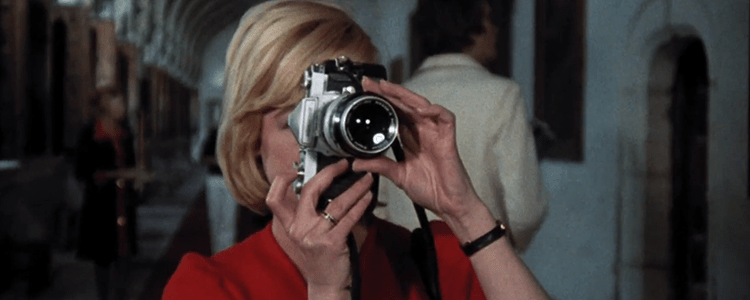
Exorcismo: The Transgressive Legacy of Clasificada ‘S’ really doesn’t pull any punches when it comes to making it clear that there is a heavy and powerful political element to this rating and to these films. Sure on the surface it might just seem like a bunch of people making films with a lot of sex and violence that is so over the top it needs its own rating but the film keeps making sure to tie these films in with the long history that preceded them, making even the most gonzo Spanish horror film of that era into a political statement (because it must be said, all art is political and especially art created in response to the death of a fascist). It certainly doesn’t mind playing the more titillating fun moments of the films it’s talking about to pull the audience in, because it can use that as a springboard to also talk about just how Spain handled the aftermath of several decades with Franco in charge.
It’s honestly kind of hard to really say much more about Exorcismo: The Transgressive Legacy of Clasificada ‘S’ than I have because it’s so well done and effective at its job that an entire review can boil down to “Are you in any way interested in extreme cinema and its history?”, if the answer is yes then you need to see this film as soon as possible because it’s one of the best historical documents we have around this topic. It takes time to explain the important historical events that set things in motion before it has the fun of showing off what could be done when the restraints were finally taken off the industry.
Exorcismo: The Transgressive Legacy of Clasificada ‘S’ is a must-see for film lovers of all stripes, even if some of the content of the films that are brought up might make you a little squeamish; it’s still an important historical document that lays it all out for us. It’s a film that really shows just how free art can be once it’s free from fascists deciding what can and can’t be made… so I look forward to the weird transgressive art we’re going to get out of the US once they’ve dealt with their current fascist problem.

 Movie Meister Reviews