
Walkatjurra is available as part of the Melbourne Documentary Film Festival
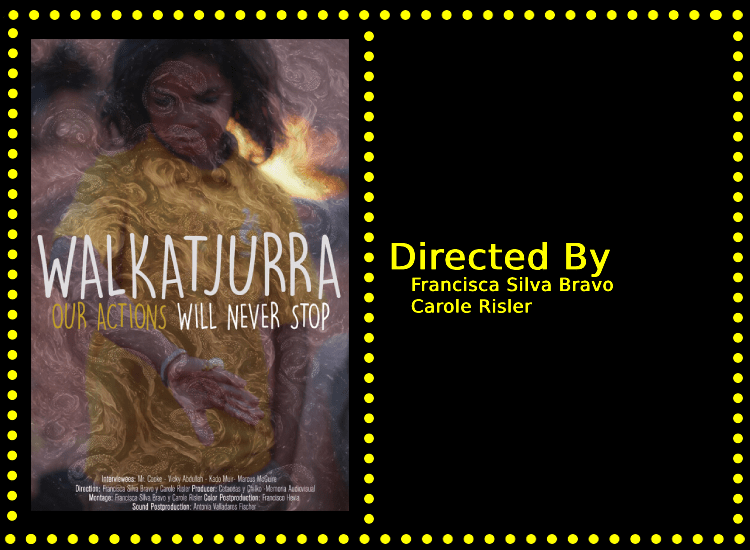
Since 1954 Australia has been mining uranium to supply it to other countries (mainly the US and UK, though there have been others in recent years) where it can be turned into nuclear weapons or used in power plants. Those weapons were tested in several parts of Australia up until 1963 so several areas are still pretty radioactive… and hey, there is still uranium to be mined and profit to be made so we keep digging it up. It’s been 70 years since we started digging and more and more protests are happening to try and be a force for change, hopefully ending this system once and for all. One group’s protest that’s filmed as the central focus of Walkatjurra involves a 200km walk through the desert where a lot of this mining has taken place, a mobile protest that shows that this land is precious and used by a lot of people.
Walkatjurra is mostly a ‘fly on the wall’ style documentary where the filmmaker has embedded themself within the group they’re documenting and just shows what happens. Most of the documentary feels like you’re just joining in the long walk, listening to the stories told by the indigenous people along the way and learning about the history of the uranium issue that made this walk necessary. The film is occasionally interrupted by brief little animations that either show the path that’s being walked (since they can’t show all 200km of the walk in an hour, it’s an easy way to shorten the time) or helps illustrate the story being told while also breaking up the experience enough that you don’t feel bored looking at a lot of sand for an hour.
Throughout Walkatjurra there’s this feeling of camaraderie that oozes off the screen, making you feel like you’re actually joining in on this walk and experiencing it firsthand. There’s excitement and intrigue in seeing some of the native wildlife, there’s a fascination in learning about how people live on this area of land (though for the squeamish, might want to look away when the kangaroo pops up because while it’s fascinating to learn how to prepare a kangaroo, they do not shy away from showing it opened up and that might be a bit much for some people) and the history being told at various points is truly something important. You slowly pick up on these fascinating stories the more the walk goes on and it’s a great way to learn about this culture.

What might make Walkatjurra a bit hard to follow is that it’s not exactly telling a narrative as much as it is bringing you along for this experience which can be somewhat ponderous. It’s certainly an interesting way to talk about this subject but you have to be in the right frame of mind to give it your full attention because even at only a little over an hour, there’s still time for the mind to go off on a bit of a wander. You have to be prepared to basically force yourself to follow along at times which is certainly doable, but there are times when it’s more difficult than it should be.
Also, it would have been great if the film talked a little more about the uranium issue that started this. It comes up a few times and there’s some handy text on screen to give some important info right at the end but it factors in so little that you could picture someone forgetting what the actual purpose of this all is. It’s still fascinating even if you do forget that element, but it would be great if they could’ve been a little more pointed about that message.
All in all though, Walkatjurra is still quite fascinating, a way to learn about people who you might not get a chance to learn about otherwise while also getting to hear about this devistating uranium mining that’s going on right here in Australia. While it’s a little slow and less engaging than it probably should be considering the subject matter, it’s still got quite a lot that’s undeniably worth your time.

 Movie Meister Reviews